


LSU Paths to PhD: Researcher Connects Chemistry and Environmental Science to Study Pollution
May 13, 2026
As microplastics spread through oceans, rivers, soil, and even the atmosphere, scientists are racing to understand how these tiny pollutants move through the environment—and how their impacts might be reduced.
For LSU doctoral student Philip Brahana, that challenge sits at the intersection of environmental science, chemistry, and public health. A graduate research assistant in the Bharti Research Group at LSU, Brahana studies the “colloidal” behavior of microplastics—how microscopic particles interact with water, air, sunlight, and other environmental forces.
Did you know? The first scientist to study microplastics, Dr. Edward Carpenter, mistook the plastic particles in his water samples for fish eggs!
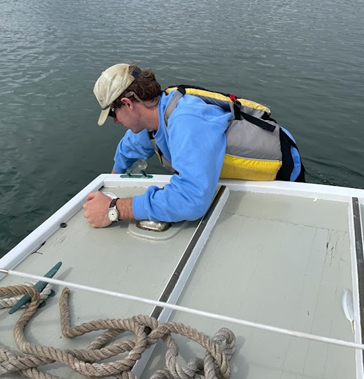
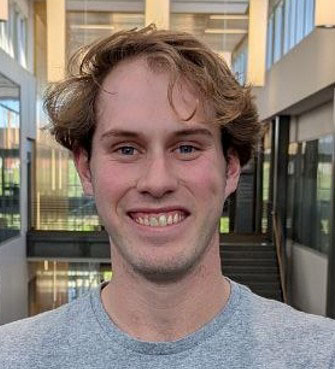
Philip Brahana collects water samples in the Gulf of Maine while looking for microplastic fragments in waters inhabited by seabird colonies.
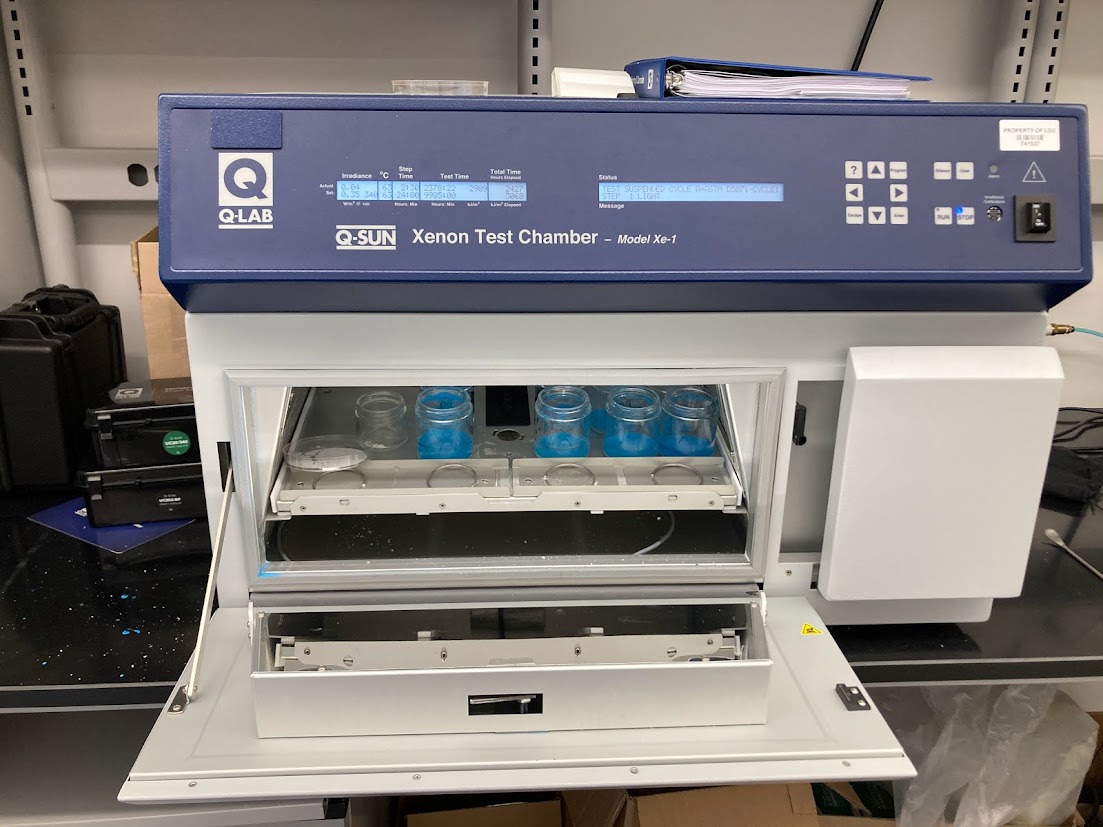
An experimental weathering chamber used in Philip Brahana’s graduate research simulates sunlight to study the effects of photooxidation on the colloidal properties of microplastic particles.
Brahana earned his bachelor’s degree in coastal environmental science from LSU in 2020 and a Master of Public Health from LSU Health New Orleans in 2022. He is now a PhD candidate in engineering science and also serves as an environmental scientist for the Louisiana Department of Environmental Quality.
What interested you initially about your thesis research topic?
Before beginning my graduate research, I was a field scientist studying microplastics in Coastal Maine. The results from my research in Maine led us to more complex questions, which could only be answered by understanding the colloidal properties of these microplastic pollutants.
What are “colloids” and why are tiny particles of particular interest with regard to environmental contamination?
Colloids are tiny particles of one phase that are dispersed within another phase, without settling out (common examples are paint, toothpaste, and milk). In environmental contamination, understanding the colloidal properties of tiny pollutants (like microplastics) helps us understand how they are transported through the environment.
What new things are we learning about microplastics and why do they matter? What are some promising avenues for removing them and other colloid pollutants from the environment?
Microplastic pollution is a relatively new field of research, and we are learning more every day. We are learning how airborne microplastics may be influencing atmospheric processes such as cloud formation and precipitation patterns. While there are some promising new technologies being developed for microplastic removal, I think that the most exciting avenues involve the use of colloid and interfacial science to develop safe, but equally effective plastic alternatives.
What is your favorite fun fact about your research project or topic?
The first scientist to study microplastics, Dr. Edward Carpenter, mistook the plastic particles in his water samples for fish eggs!
What were some of the biggest challenges in your project and how did you overcome them?
The biggest challenge in my projects was bridging the gap between physical chemistry and environmental science. Overcoming this required careful scientific communication through our research articles and conference presentations to explain our results in a way that was meaningful to both physical chemists and environmental scientists.
What were some of the most surprising or impactful things that you found or learned during your project? What are the implications of your findings?
The most impactful findings from my project are relating to the weathering of microplastics to their environmental fate and transport. Specifically, we show that the amount of sunlight and environmental stress endured by a microplastic particle is directly related to how it transports through the environment. This will help future scientists explain their observations in both the field and the lab.
What are your plans after graduation? What will you take away from your PhD research experience at LSU?
Currently, I work as an Environmental Scientist for the Louisiana Department of Environmental Quality. Here, I use my knowledge of colloid science, as well as emerging environmental issues, to better protect Louisiana's environment.